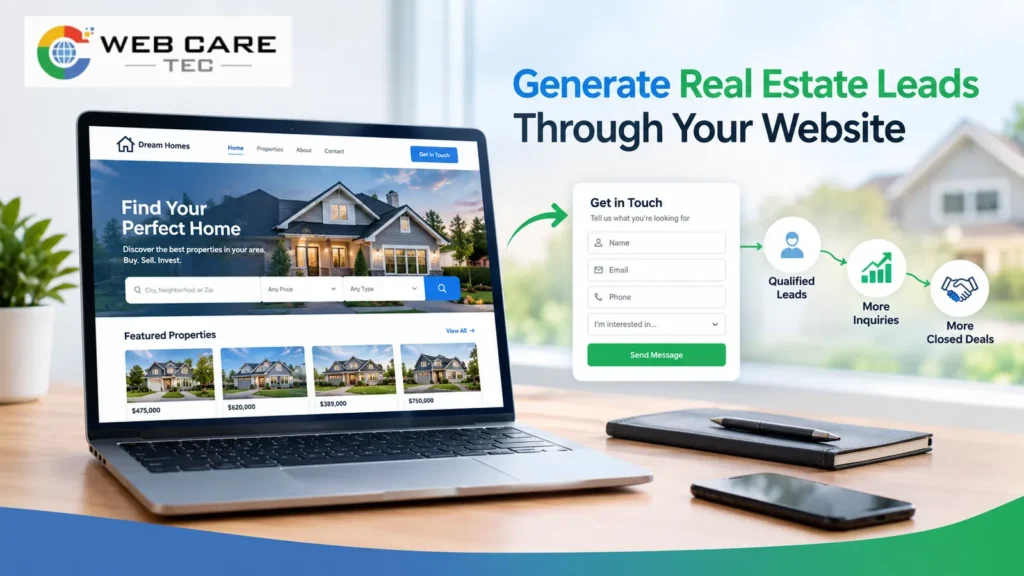
A real estate website should do more than display property listings and provide information about your business. It should help potential buyers and sellers take the next step, whether that means asking about a property, requesting a home valuation, or getting in touch with an agent.
But getting visitors to your website is only part of the job. You also need to give them a reason to contact you.
If you want to generate real estate leads through your website, start by understanding what visitors are looking for and making it easy for them to take action. Here are some practical ways to turn more of your website traffic into genuine inquiries.
1. Generate Real Estate Leads by Understanding Your Visitors
Not everyone who visits a real estate website has the same goal. Some people are searching for their next home, while others want to sell a property or explore investment opportunities.
Your website should make it easy for each visitor to find the information they need.
For example, buyers may want to browse available properties, compare neighborhoods, or check their budget. Sellers may be more interested in understanding their home’s value and learning how to sell it.
Think about the people you want to reach and what they need from your website. When your pages answer those questions clearly, visitors have more reasons to stay and get in touch.
2. Create Landing Pages for Buyers and Sellers
Sending every visitor to your homepage isn’t always the best way to generate leads. Someone looking to sell a house has different needs from someone searching for a property to buy.
Dedicated landing pages allow you to speak directly to each audience.
For example, a real estate agent could create separate pages for:
- Buyers looking for homes in a specific area.
- Homeowners interested in selling their properties.
- Sellers who want a home valuation.
- Investors searching for rental or investment properties.
Each page should explain how you can help and include a clear next step, such as requesting a property consultation or submitting an inquiry.
3. Make Property Inquiries Easy
Property listings can attract visitors, but those visitors won’t necessarily contact you unless the next step is clear.
Look at your property pages from a potential buyer’s perspective. Can they easily ask about a listing? Is your contact information visible? Can they request a showing without searching through several pages?
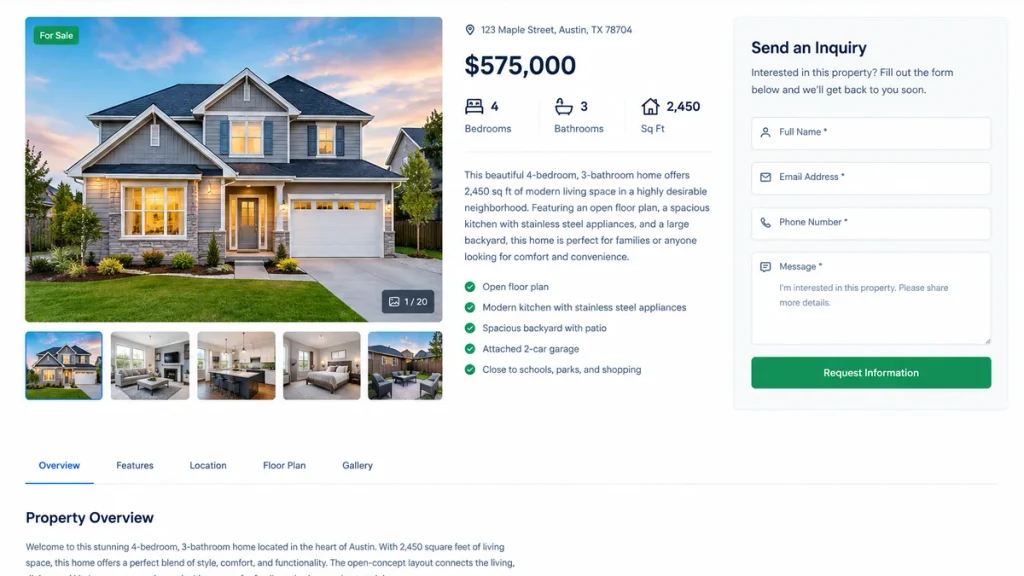
Consider adding an inquiry form to individual property listings, along with useful details such as the price, location, property features, and available viewing options.
You can also give visitors a simple way to ask questions about a property they’re interested in.
The goal isn’t to add more forms everywhere. It’s to make contacting you feel like a natural next step when someone finds a property they like.
4. Use Clear Calls to Action
Visitors shouldn’t have to guess what to do next. Every important page should guide them toward a relevant action.
Instead of relying on a generic “Contact Us” button everywhere, use calls to action that match the purpose of the page.
For example:
- Property listings: Schedule a Showing
- Seller pages: Request a Home Valuation
- Buyer pages: Find Your Next Home
- Investment pages: Discuss an Investment Property
Place these buttons where visitors are likely to need them, such as near property details or after explaining a service.
Keep the wording simple and make sure each button leads to the correct form or page. A clear next step can make the experience easier for visitors and help you capture more inquiries.
5. Keep Your Lead Forms Short
A long contact form can discourage people from reaching out, especially when they’re only asking a simple question.
Start by collecting the information you actually need. For a property inquiry, that might include a name, email address, phone number if necessary, and a short message.
For a home valuation request, you may need the property address and a few basic details about the home.
You can always collect additional information later, once you’ve started a conversation.
Also, make sure your forms work properly on mobile devices. Visitors should be able to complete them without zooming in, struggling with small fields, or dealing with unnecessary steps.
A straightforward form makes it easier for interested visitors to contact you.
6. Attract Local Visitors With Useful Content
Real estate is closely connected to location. People often search for properties, neighborhoods, schools, and local market information before deciding where to buy or sell.
Your website can answer these questions through useful, location-specific content.
For example, you could publish pages about neighborhoods you serve, explain what buyers should consider when moving to a particular area, or share information about the local property market.
These pages can help potential clients discover your website through relevant searches. They also give visitors a better understanding of the areas you know.
A well-planned SEO strategy can help you attract people who are already searching for real estate information in your target market. Learn more about our real estate SEO services.
Focus on answering genuine questions rather than creating multiple pages with nearly identical content. Each page should offer something useful to the people reading it.
7. Give Visitors a Reason to Trust You
Buying or selling a property is a major decision. Before sharing their contact information, visitors often want to know whether they’re dealing with someone they can trust.
Your website should make that decision easier.
Include a clear introduction to your business, accurate contact information, and details about the areas you serve. If you have genuine client testimonials, relevant experience, or examples of completed transactions, share them where appropriate.
Property information should also be accurate and up to date. Outdated listings, broken links, and missing contact details can leave visitors questioning whether your business is reliable.
You don’t need to fill every page with sales messages. Clear information, a professional presentation, and an easy way to reach you can go a long way toward building confidence.
8. Follow Up With New Leads Promptly
Getting an inquiry is a good start, but what happens afterward matters too.
If someone requests a showing or asks about a property, they should receive a response within a reasonable time. Leaving inquiries unanswered can mean losing opportunities to agents who respond sooner.
As your business grows, keeping track of every inquiry manually can become difficult. This is where a customer relationship management (CRM) system and simple automation workflows can help.
For example, you could send an acknowledgment when someone submits a form, notify the appropriate agent, and record the inquiry in your CRM. You can then follow up personally and keep track of the conversation.
Automation won’t replace the relationship-building part of real estate. It helps you stay organized so fewer inquiries slip through the cracks.
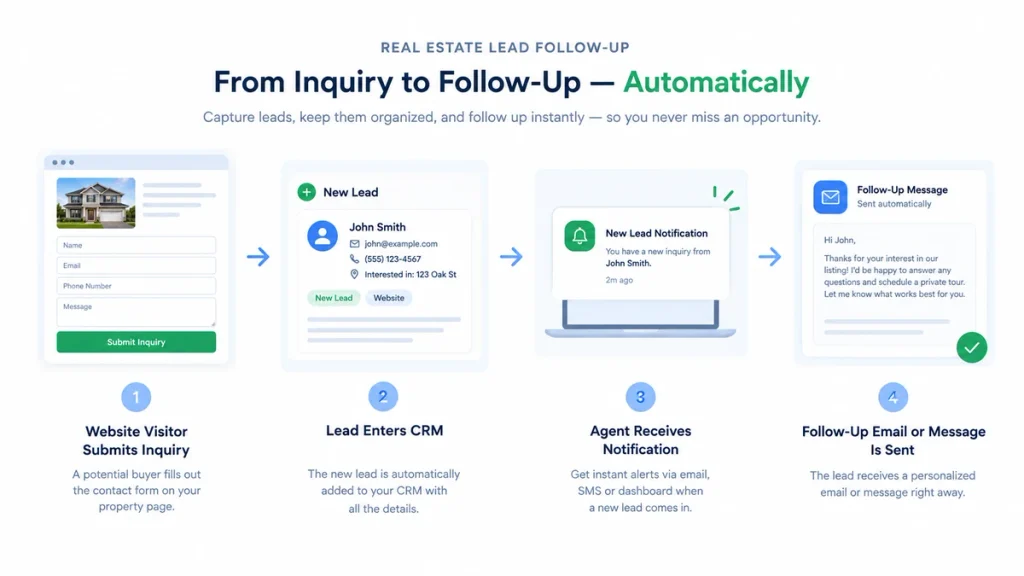
Explore our real estate automation solutions to see how these workflows can support your business.
9. Track Which Pages Generate Leads
You don’t have to guess which parts of your website are working. Basic tracking can help you understand how visitors interact with your pages and where inquiries come from.
Start by monitoring a few useful metrics:
- Website traffic: Which pages attract visitors?
- Form submissions: How many people complete an inquiry form?
- Conversion rate: What percentage of visitors take a desired action?
- Traffic sources: Are visitors arriving through search engines, paid campaigns, or other channels?
- Landing page performance: Which pages generate the most useful inquiries?
You can use Google Analytics to help measure website activity and configure relevant events.
Make sure important actions, such as successful form submissions, are tracked correctly. A form view isn’t the same as a completed inquiry.
Review your results regularly. If a page attracts visitors but generates very few inquiries, look at its content, calls to action, form experience, and relevance to the search that brought people there.
10. Fix Problems That Make Visitors Leave
Sometimes, the issue isn’t a lack of traffic. It’s that visitors have trouble using the website or finding what they need.
Review your website on both desktop and mobile devices. Pay attention to things such as:
- Slow-loading property pages.
- Navigation that’s difficult to understand.
- Forms that don’t submit correctly.
- Buttons that are hard to find or use.
- Missing property details or outdated information.
- Pages that look cluttered on smaller screens.
Ask someone unfamiliar with your website to find a property and send an inquiry. Watch where they hesitate or get confused.
This simple exercise can reveal problems you might overlook because you’re already familiar with the site.
Fix the most important issues first, then check whether the changes improve the visitor experience and lead submissions.
Real Estate Website Lead Generation Checklist
Before investing more time or money in attracting traffic, make sure your website gives visitors a clear path to contact you.
Use this checklist to review your current website:
- Buyers and sellers can easily find relevant information.
- Property listings include clear inquiry options.
- Important pages have relevant calls to action.
- Contact forms are short and work on mobile devices.
- Local pages provide useful, original information.
- Your business details and property information are accurate.
- New inquiries can be tracked and followed up.
- Form submissions and other important actions are measured.
- The website loads properly and has no major usability issues.
You don’t have to make every change at once. Start with the issues that are most likely to prevent an interested visitor from contacting you.
Turning Website Visitors Into Real Estate Leads
A real estate website doesn’t need dozens of features to generate inquiries. It needs to help the right people find relevant information, understand how you can help, and contact you without unnecessary effort.
To generate real estate leads through your website, start by reviewing your property pages, calls to action, and lead forms. Then look at your local content, follow-up process, and tracking setup. Small improvements in these areas can make it easier for potential clients to reach you.
At Web Care Tec, we help real estate professionals build websites that support lead generation, search visibility, and more organized follow-up.
Looking to improve your real estate website? Contact Web Care Tec to discuss a website built around your business goals.