
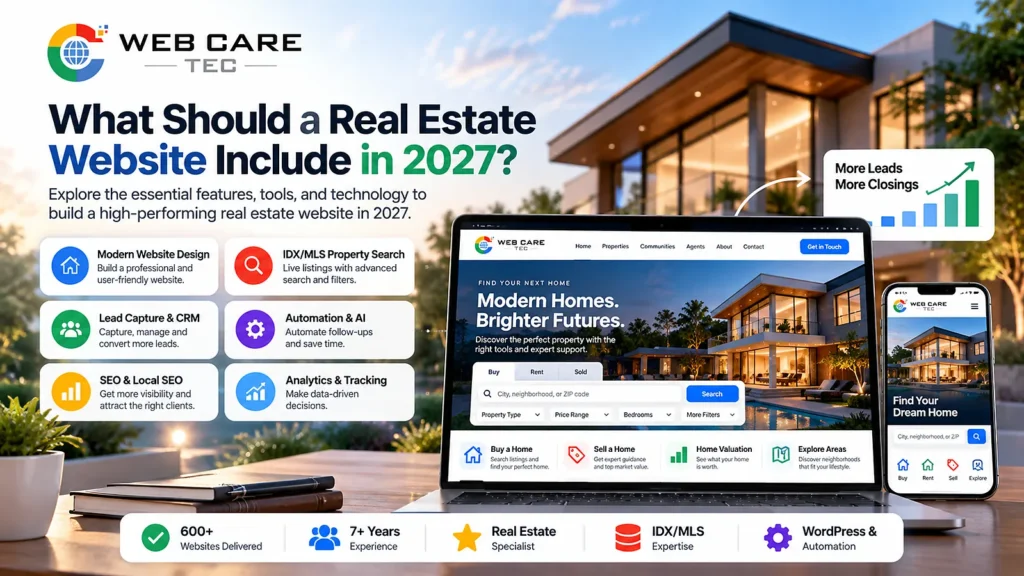
Real estate website essentials have changed significantly as buyers, sellers, and investors expect faster, smarter, and more connected online experiences. In 2027, a successful real estate website needs to do more than display listings and provide a contact form.
More importantly, the website should work as part of the business not as a standalone brochure.
A strong real estate website can connect property search, lead capture, CRM, follow-up, analytics, SEO, and automation into one system. It can also use AI where it genuinely improves the visitor experience.
So, what should a real estate website include in 2027?
Here’s the practical checklist.
1. A Clear Value Proposition
Before adding advanced technology, the website needs to make one thing immediately clear:
Who do you help, what do you offer, and why should someone choose you?
A visitor should understand the business within seconds of landing on the homepage.
For example, an agent might focus on:
- Buying and selling homes
- A specific local market
- Luxury properties
- First-time buyers
- Relocation
- Investment properties
A brokerage may need to communicate its agents, markets, services, listings, and expertise.
The website shouldn’t force visitors to figure out what the business does.
A strong homepage should include:
- A clear headline
- Short supporting message
- Primary call-to-action
- Key services
- Property search or featured listings
- Trust signals
- Reviews or testimonials
- Relevant market information
- Easy contact options
The goal isn’t to put everything above the fold. It’s to make the next step obvious.
2. MLS/IDX Property Search
For many real estate businesses, property search is one of the most important parts of the website.
Visitors should be able to search for properties without feeling like they’ve been sent somewhere else.
A useful property search can include:
- Property type
- Price range
- Bedrooms and bathrooms
- Location
- Property status
- Square footage
- Lot size
- Advanced filters
- Map-based search
- Individual listing pages
- Saved searches
- Listing alerts
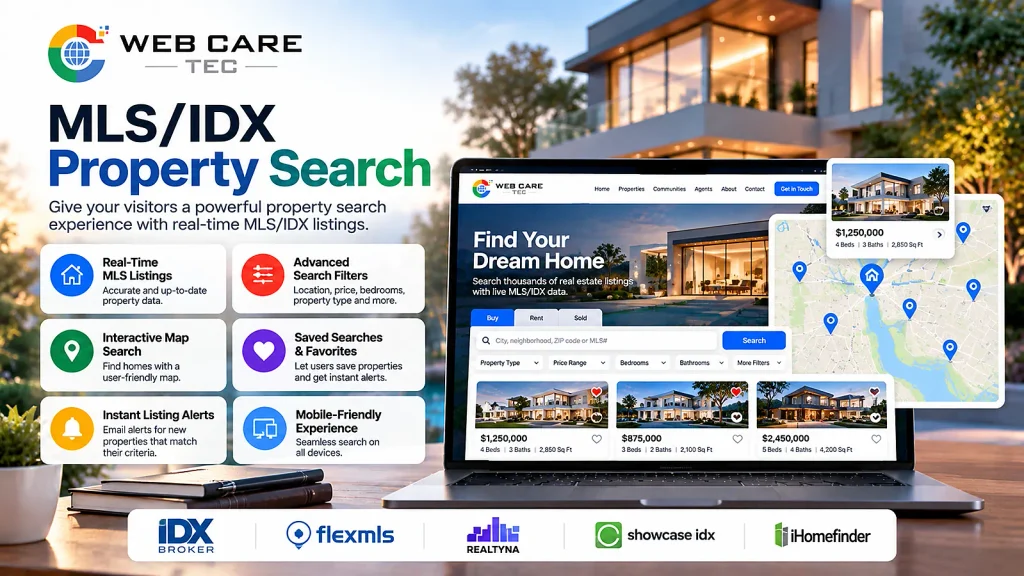
The experience should also work well on mobile devices.
Why does this matter?
Someone visiting your website may already know what they want. If they can search, compare properties, save listings, and request information without friction, the website becomes part of their buying journey instead of simply being an online business card.
3. Lead Capture That Matches Visitor Intent
A real estate website should make it easy for visitors to take the next step. Instead of relying on one generic call-to-action, the website should offer relevant options based on what each visitor is looking for.
Different visitors have different goals.
A buyer may want:
- A property showing
- More information about a listing
- Property recommendations
- A buyer consultation
A seller may want:
- A home valuation
- A selling consultation
- A market analysis
- Information about selling their property
An investor may want:
- Deal information
- Property opportunities
- Seller inquiries
- Cash-buyer opportunities
The best real estate websites create different conversion paths for different visitors.
Good lead-capture opportunities include:
- Contact forms
- Showing requests
- Home valuation forms
- Buyer consultation forms
- Seller forms
- Newsletter signups
- Property inquiry forms
- Appointment booking
- Click-to-call options
The objective isn’t to collect the maximum number of forms.
It’s to make the right action easy at the right moment.
4. CRM and Lead Management
A website shouldn’t stop working after someone submits a form.
This is one of the biggest differences between a basic website and a modern real estate website.
A visitor might submit an inquiry at 10 PM. What happens next?
Website → Lead Capture → CRM → Lead Assignment → Follow-Up
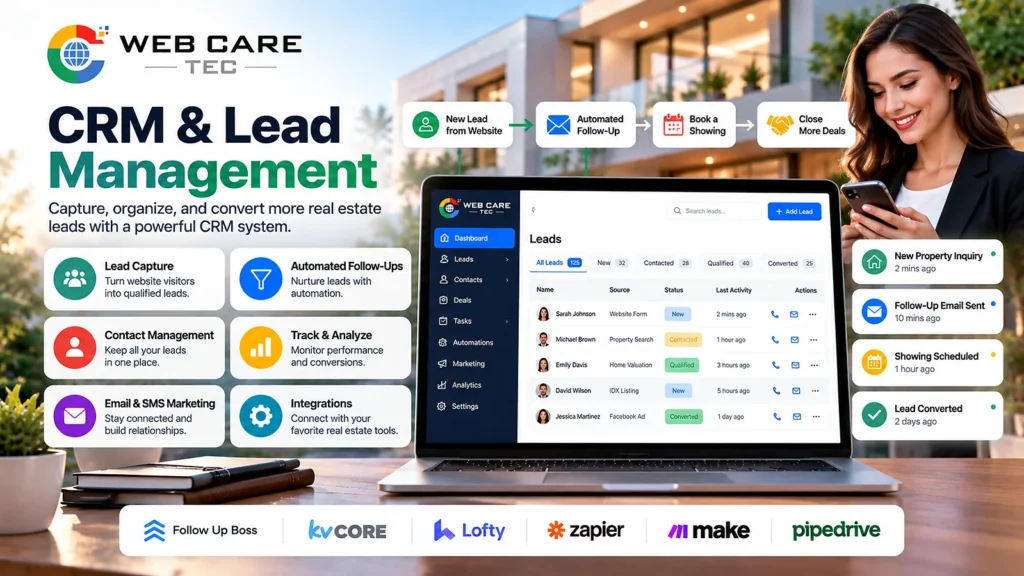
The lead should be stored, organized, and routed appropriately so that the business can respond without manually copying information between systems.
A website can connect with a CRM to help businesses:
- Store new leads
- Assign leads
- Track conversations
- Monitor lead status
- Organize buyer and seller inquiries
- Trigger follow-up
- Track opportunities
For businesses handling a larger number of inquiries, a proper real estate lead management system can become an important part of the overall website strategy.
5. Mobile-First User Experience
A real estate website has to work extremely well on mobile.
Visitors may be:
- Searching properties from their phone
- Checking a listing while traveling
- Looking at neighborhood information
- Calling an agent
- Filling out a form
- Requesting a showing
A mobile-friendly website should make these actions simple.
Check your website for:
- Easy-to-use navigation
- Readable text
- Large enough buttons
- Mobile-friendly property search
- Short, simple forms
- Fast-loading images
- Easy phone and contact options
- Properly sized listing galleries
Mobile design isn’t simply about shrinking the desktop version.
The experience should be designed around how people actually use the website.
6. Fast Website Performance
A beautiful website that takes too long to load can still create a poor experience.
Real estate websites can become particularly heavy because they often contain:
- Large property images
- Image galleries
- Maps
- IDX components
- Videos
- Third-party scripts
- Tracking tools
- CRM integrations
- Chat widgets
Performance should therefore be considered from the beginning.
A performance-focused website should consider:
- Image optimization
- Browser caching
- CDN delivery
- Efficient scripts
- Properly loaded fonts
- Reduced unnecessary plugins
- Server performance
- Mobile performance
- Core Web Vitals
Google also recommends considering the overall page experience, including Core Web Vitals, secure delivery, mobile usability, and avoiding intrusive experiences.
You can learn more about Google’s recommendations in its Page Experience guidance.
7. An SEO-Ready Website Structure
SEO shouldn’t be something added after the website is finished.
The website structure should make it easy for search engines and visitors to understand the business.
Important elements can include:
- Logical navigation
- Descriptive page titles
- Clear headings
- Search-friendly URLs
- Internal links
- Location pages
- Neighborhood content
- Service pages
- Useful property content
- Image optimization
- Structured data where appropriate
But there’s an important distinction:
SEO-ready doesn’t mean keyword-stuffed.
A website can have excellent technical SEO and still fail to attract visitors if the content doesn’t answer their questions or provide something useful.
For a real estate business, SEO should ultimately support visibility and the user’s journey toward becoming a lead.
If you’re looking to improve the search visibility of an existing real estate website, explore our Real Estate SEO solutions.
8. Local Market and Neighborhood Information
Real estate is inherently local.
A visitor may not simply search for an agent. They may be researching:
- Neighborhoods
- Communities
- Schools
- Local amenities
- Market conditions
- Property types
- Lifestyle
- Commute options
- Areas to buy or sell
A strong website can therefore provide useful local content alongside its property listings.
Neighborhood pages could include:
- Overview
- Property types
- Current listings
- Local amenities
- Lifestyle information
- Nearby communities
- Market information
- Frequently asked questions
The goal should be to help someone understand the market—not create hundreds of thin location pages just to target different city names.
9. AI Features That Actually Help Visitors
AI will be an increasingly important part of real estate websites in 2027, but adding AI simply because it’s trending isn’t enough.
The question should be:
Does this AI feature make the visitor’s experience better?
Useful applications may include:
AI website chat
Visitors can ask questions about:
- Services
- Buying
- Selling
- Properties
- Areas
- Appointments
AI-assisted property discovery
Instead of forcing visitors to use complicated filters, an AI interface could help interpret requests such as:
“Show me three-bedroom homes under $500,000 near downtown with a garage.”
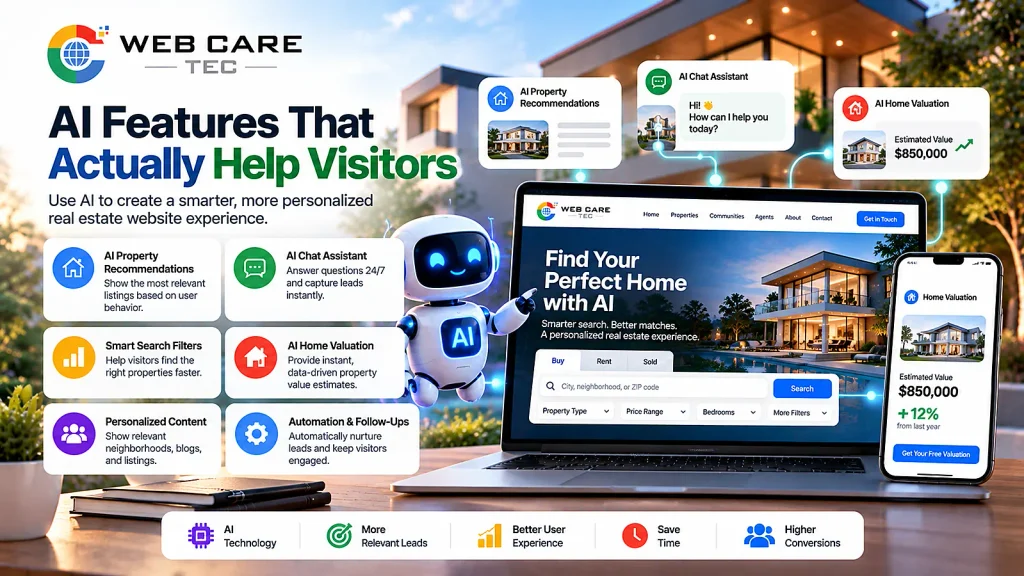
AI lead qualification
An AI assistant can ask initial questions and help determine whether a visitor is a buyer, seller, investor, or general researcher.
AI-assisted follow-up
AI can help organize conversations and support personalized follow-up through connected systems.
The important part is usefulness.
AI should improve the experience—not become another annoying popup.
10. Automation Behind the Website
A modern real estate website can become much more powerful when connected to business workflows.
For example:
New seller inquiry
Website Form → CRM → Lead Assignment → Instant Notification → Email/SMS Follow-Up → Appointment Opportunity
Or:
Property inquiry
Listing Page → Inquiry Form → CRM → Agent Notification → Follow-Up
This can reduce repetitive manual work and help businesses respond more consistently.
Automation can be particularly valuable when a business receives leads from several sources.
The website becomes the starting point for a larger system rather than an isolated marketing asset.
For businesses that want to connect their website with CRM, lead routing, and follow-up workflows, explore our Real Estate Automation solutions.
11. Strong Calls-to-Action
A website visitor should always have a clear next step.
But the CTA should match the page.
Instead of using “Contact Us” everywhere, consider more specific actions:
- Search Properties
- Schedule a Showing
- Get a Home Valuation
- Talk to an Agent
- Request Property Information
- Book a Consultation
- Get Started
- View Listings
The CTA should answer:
What should I do next?
A clear CTA can be more effective than adding more content to a page.
12. Trust Signals
Buying or selling property is a major decision.
Visitors need reasons to trust the business.
A professional website can include:
- Client reviews
- Testimonials
- Agent profiles
- Brokerage information
- Years of experience
- Local expertise
- Awards where applicable
- Professional photography
- Clear contact information
- Social proof
- Relevant credentials
Trust shouldn’t be exaggerated.
Instead, provide real evidence that helps visitors understand who they are dealing with.
13. Analytics and Conversion Tracking
Traffic alone doesn’t tell you whether the website is working.
A real estate website should help answer questions such as:
- How many people visit the website?
- Which pages attract the most visitors?
- Which properties receive the most interest?
- Where do leads come from?
- Which forms generate inquiries?
- How many visitors book consultations?
- Which traffic sources generate better leads?
This information can help identify what’s working and where the website needs improvement.
The goal isn’t simply:
More traffic.
It’s:
More qualified opportunities from the right traffic.
14. Security and Privacy
Real estate websites often collect personal information through:
- Contact forms
- Showing requests
- Valuation forms
- Consultation forms
- Account registrations
- Property alerts
Security therefore shouldn’t be an afterthought.
At minimum, businesses should pay attention to:
- HTTPS
- Secure forms
- Plugin and software updates
- Secure hosting
- Access controls
- Spam protection
- Privacy information
- Third-party integrations
The more systems connected to the website, the more important proper security practices become.
15. Real Estate Website Checklist for 2027
If you’re planning a new real estate website, use this checklist:
Website foundation
- Clear value proposition
- Professional branding
- Simple navigation
- Clear calls-to-action
Property experience
- MLS/IDX search
- Advanced property filters
- Map search
- Individual listing pages
- Property inquiry options
Lead generation
- Buyer lead forms
- Seller lead forms
- Showing requests
- Valuation opportunities
- Appointment booking
Business systems
- CRM connection
- Lead management
- Lead routing
- Automated follow-up
- Analytics and conversion tracking
User experience
- Mobile-first design
- Fast performance
- Easy navigation
- Accessible content
- Simple forms
Growth
- SEO-ready structure
- Local market content
- Neighborhood pages
- Useful resources
- Reviews and trust signals
2027-ready technology
- Useful AI features
- Smart automation
- Connected CRM
- Integrated marketing tools
16. Real Estate Website Essentials: More Than a Digital Brochure
The biggest mistake is treating a real estate website as something that simply needs to look good.
A modern website should connect the entire customer journey.
Think of it this way:
Visitor → Property Search → Lead Capture → CRM → Follow-Up → Appointment → Client
That’s the direction real estate websites are moving toward.
The design still matters. SEO still matters. Property listings still matter.
But the real value comes from making those pieces work together.
17. Build a Real Estate Website That Works for Your Business
A successful real estate website in 2027 should do more than look professional. It should help visitors find properties, understand your services, take the next step, and stay connected with your business.
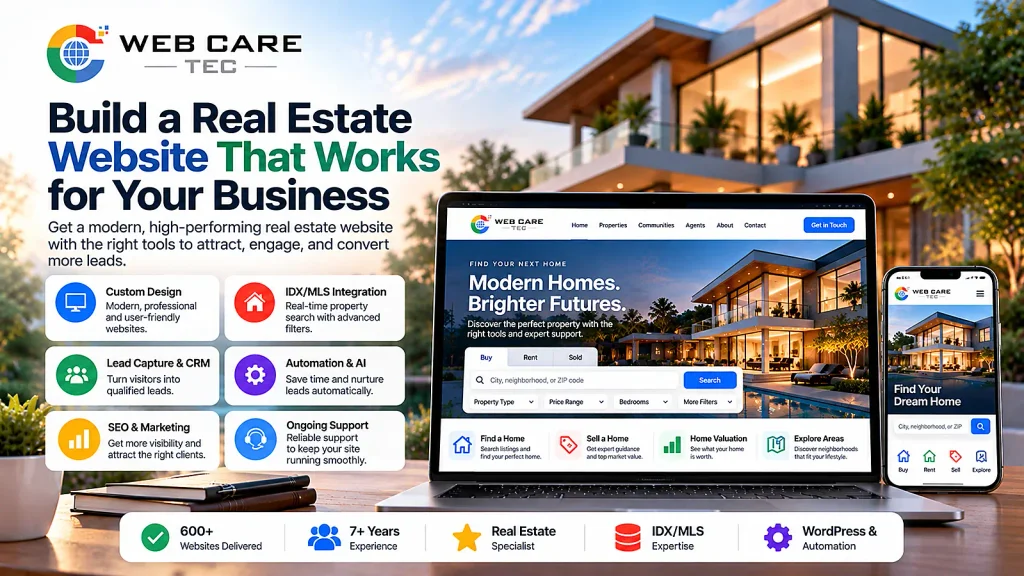
The right combination of property search, lead capture, CRM, SEO, automation, analytics, and AI can turn your website from a simple online presence into a system that supports your growth.
The goal isn’t to add every new feature available. It’s to choose the features that make your customers’ journey easier and help your business turn more website visitors into real opportunities.
If you’re planning a new website or improving an existing one, start by asking:
What does my ideal visitor need to accomplish—and what should happen after they take that first step?
Once those questions are clear, the right combination of technology becomes much easier to determine.
For agents, teams, and brokerages, explore our Agent & Brokerage Websites to see how we build websites around real estate businesses.
For investors and wholesalers, explore our Investors & Wholesalers Websites for websites built around seller leads, deal presentation, and business growth.
Ready to Take the Next Step?
Let’s discuss your real estate business goals and identify the right website features, integrations, and automation opportunities for your needs.
Book a Free Consultation to discuss your project and discover how the right website and technology can support your growth.